




46.9 F
Slippery Rock
Thursday, October 8, 2026
Home Blog

PA House Democrats Destruct Democracy In The Dark
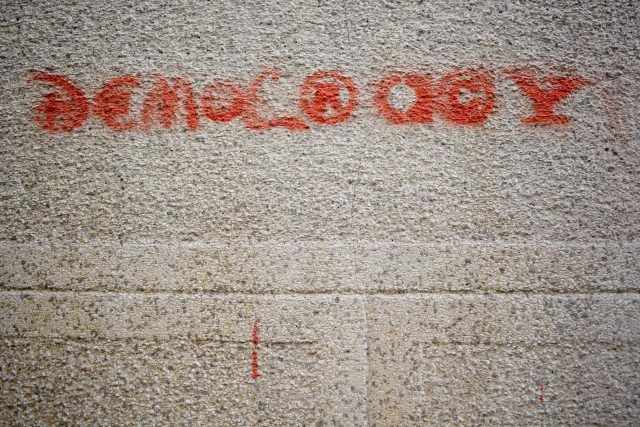
While many Pennsylvanians were tuned into the dysfunction in Washington DC last week, Democrats in the state House were one-upping Congress and leading one of the most destructive assaults on democracy I have seen in my time in Harrisburg.

The week was full of shady last-minute legislation, the silencing of debate when anyone objected to their ideas, and passage of a bill that spends $800 million more of your tax dollars. But by far the worst and most concerning action happened while most Pennsylvanians were sleeping.

House Democrats bypassed a chamber rule that prevents voting after 11 p.m. and rammed through harmful changes to our election laws at midnight, with only a few minutes notice to Republicans.

The 11 p.m. session cut-off rule was put in place after the 2005 “midnight pay raise,” when lawmakers voted themselves a salary increase in the early morning hours after most of their constituents were in bed. Last week’s late committee meeting was held off until Capitol reporters left for the day, an obvious and appalling attempt at secrecy.

The bill, Senate Bill 224, was amended by House Democrats to make mail-in voting permanent – meaning that after you apply the first time, you never have to apply for it again. With documented inaccuracies in our voter rolls, this means deceased voters and those who move would continue to receive ballots. Additionally, the bill would have taken effect immediately, forcing county election officials to make drastic changes at the last minute, further eroding trust in our electoral process. While the bill did include a form of voter identification, it was laced with loopholes and measures that would ultimately render the identity check useless. House Appropriations Committee members were given 3 minutes prior to the vote in the dark of night to read the legislation, and the rest of my House colleagues and I were forced to take a vote on it less than 12 hours later.

Thankfully, we were able to defeat the harmful measure on the House floor. The bill was so bad, it only received 26 yes votes.

The midnight election law takeover was far from the only questionable action taken by House Democrats last week. My fellow PA Freedom Caucus members and I called out another late-night attempt to work around the state Constitution, which requires a two-thirds majority vote to send taxpayer funding to state-related universities such as the University of Pittsburgh, Pennsylvania State University, and Temple University. The PA Freedom Caucus had previously worked to block this funding due to policy issues ranging from the prescription of puberty blockers to children to free speech on campus. Unfortunately, Democrats colluded with 19 Republicans to get enough votes to pass the over $800 million hike in spending.

These actions and others certainly happen on both sides of the aisle. As history shows us, corruption and back-room deals are non-partisan. However, there was no doubt that last week in Harrisburg PA House Democrats were leading the charge on forcing their extreme ideas, excessive government, and election schemes forward while attempting to avoid public scrutiny. The shady breaching of rules and attempts to deteriorate our elections demonstrate why voters do no trust politicians. While Republicans in the House are left without much legislative remedy to these practices in the minority, I will never stop exposing the corruption in Harrisburg.

.

Aaron Bernstine (R)
8th Legislative District
Pennsylvania State Representative

Harrisburg Politicians Continue To Attack Small Businesses

When I first started out in politics, I naively believed that anyone getting into public service must want to help others. As lawmakers, we are tasked with putting forth policies that support the average Pennsylvanian and building a commonwealth where anyone can thrive. I have since learned that this is just not the case. 

Too many of my peers in Harrisburg have made it their mission to jeopardize small businesses – the backbone of our economy – and threaten the very livelihoods of their own constituents. Even worse, some of those same politicians have put the wishes of big, internationally-owned casino conglomerates over the best interests of our local VFWs, American Legions, volunteer firefighters, and other fraternal organizations.

Their latest attack is an attempt to ban skill games. Contrary to what casino-puppet legislators will tell you, skill games are not gambling machines. This is not up for debate. Every court in the commonwealth that has evaluated the games has ruled that they are legal. So, we can stop pretending that this issue is about anything other than creating a monopoly for casinos on the backs of Main Street Pennsylvanians.  

To small businesses across the commonwealth – these legislators do not care if you stay in business. They do not care if you can pay your bills. They do not care if you can make payroll. They do not care if you can provide for your family.

These are the same politicians that pushed for CoViD-19 closures, capacity limits, vaccine mandates, and other anti-small-business legislation just a few years ago. When it will be enough? 

Skill games have provided hundreds of small businesses across Pennsylvania with an entertainment option that their customers will play while spending money on food, beverages, and other games. These small businesses use that money to pay for bills, location updates, employee benefits, events, charitable donations, and more.  

Skill games are found in reputable family-run businesses including restaurants and bars as well as fraternal organizations and fire halls. These are your neighborhood watering holes, your mom-and-pop shops, your “Cheers.” They are not in seedy backroom mini-casinos as some would have you believe. 

It is worth noting that the skill game industry has, year after year, come to the legislature and asked to be regulated and taxed. Not only would that support the commonwealth by generating hundreds of millions in additional tax revenue per year, but it would give law enforcement the framework they need to cut down on illegal gambling once and for all. 

Those who oppose skill games love to lament how the games are not regulated. Well, there’s an easy solution – regulate them. The very entities that complain about skill games being unregulated are also the ones who have stood in the way of regulation. 

Anyone who works in the retail or restaurant industry knows that these businesses operate on thin margins and are still, three years after the pandemic, heavily impacted by inflation and staffing shortages. The result of bad policies from Democrats in Washington, DC and Harrisburg.

At the same time, restaurants are some of our most important community spaces. We learned this during the pandemic. They are where we share meals, enjoy the company of loved ones, and support causes. But more than that, they are critical economic drivers. Restaurants are one of the largest employers and tax revenue generators in the state. Should not be doing everything we can to keep them in business?

Many veterans organizations also rely on skill games for critical income. VFW halls and American Legion posts across the commonwealth have been able to afford to make renovations, provide additional services to their members, and pay employees because of skill games. I thought we could all agree that veterans, those who selflessly served our country, deserve spaces where they can share camaraderie among their peers. Isn’t that the least we can do in return? 

Lastly, the assertion that skill games harm the state lottery or casinos is, simply, a farse. This is a tired narrative that has no basis in fact. Rather, research has shown that skill games positively impact the lottery and have no impact on casinos. 

Those pushing a ban on skill games would have the public believe the sky is falling rather than face even a whiff of any perceived competition.

Are we really meant to encourage big businesses to turn to political strong-arming when they feel slightly threatened? What’s American about that? 

Now, let me address my peers in the legislature directly. At the end of your political career, when you look back on your legacy, would you like to have supported big gaming giants or Pennsylvania’s struggling small businesses and fraternal clubs? 

My focus has been, and always will be, on the small businesses and organizations that serve our community.

.

Aaron Bernstine (R)
8th Legislative District
Pennsylvania State Representative

Happy New Year

May this year give you the opportunity to follow your dreams, love like there is no tomorrow and smile unconditionally.

As we celebrate the New Year, we wish everyone success, a healthy long life and a fresh new start.

We are lucky that we get to have a new chance and a new beginning, so be grateful and live life to the fullest.

Have a joyous New Year!

Help Ukraine: Save Europe’s Future!

On February 24, 2022, Russian troops invaded the territory of independent and free Ukraine and began bombing its cities. The attack took place in the early morning, when the civilian population was still sleeping. Millions of Ukrainians woke up to the sound of air raid sirens and explosions.

Fierce fighting in Ukraine has been going on for a week already, but the Russian invaders do not think to stop continuing to kill Ukrainian people. According to the Ministry of Health of Ukraine, more than 2,000 civilians have died over the past seven endless days of the war, 21 of them are children and teens. Unfortunately, the number of victims of the Russian aggression is growing every minute.

The Ukrainian nation is forced to fight with one of the strongest and largest armies in the world. Today Ukraine is a shield for all European territories, their inhabitants and their children. It is important for us to understand that the Kremlin will not stop on Ukraine as he aims to expand his war further west. Now it is our direct duty to stop his atrocity.

How can we do this?

At this very moment, the people of Ukraine need help of any kind, especially financial help.

Please visit here to see the list of official organizations involved in raising funds for Ukraine.

Donations go directly to relief organizations that deliver medical care to the wounded and humanitarian support for people, who have lost their homes and families. Also, money is needed to replenish the military reserves of the Ukrainian army and give it resources to protect the Ukrainian people from Russian invaders.

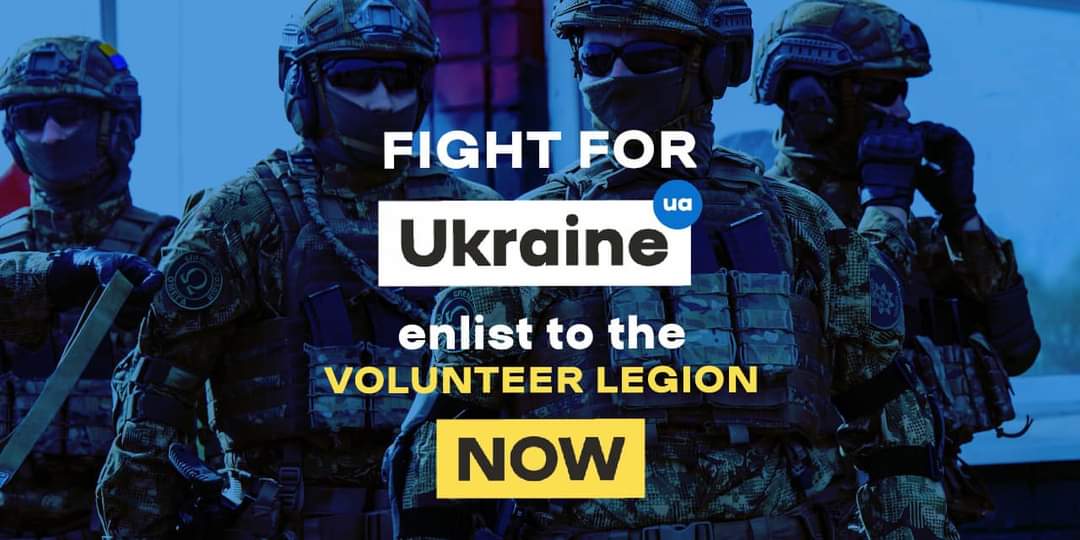
Another way to help is joining the International Legion for the Territorial Defense of Ukraine for the period of martial law.

On March 01, 2022, President of Ukraine Volodymyr Zelensky introduced a temporary visa-free regime for foreigners, who would like to repel the attack of Russian invaders, take care of international security, and protect the values of civilization.

More than 16,000 people have already entered the International Legion for the Territorial Defense of Ukrain. Among them are former soldiers, rescuers, military doctors and ordinary civilians from the Netherlands, the UK, Canada, the USA, Sweden, Japan, etc.

Volunteers from all over the globe are coming to stand side by side with Ukrainian soldiers against the war criminals of the 21st century.

Below are the steps you can take to get enrolled in the International Legion for the Territorial Defense of Ukraine on a volunteer basis:

  1. Contact the Embassy of Ukraine in your country via phone, e-mail, or come in person.
  2. Specify what documents and equipment you need to have with you.
  3. Arrive at the Embassy with documents for an interview.
  4. Write an application for entry to the Territorial Defense of the Armed Forces of Ukraine for military service under a contract.
  5. Get instructions on how to safely arrive in Ukraine.
  6. Upon arrival, sign a contract or enlistment in the Ukrainian International Legion.
  7. Go to fight the Russian invaders along with the Ukrainian militaries and soldiers from other countries.

Please visit here for more information on how to join the fight for Ukrainian freedom.

God bless Ukraine!

Merry Christmas

Happy 4th Of July

July 04, 1776
Independence Day in America

We celebrate the day we declared independence from Britain, long preceding the day we actually attained it.

That’s badass.

Neil deGrasse Tyson

St. Patrick’s Day

Get ready for green lights, green hats, even green beer! St. Patrick’s Day is on March 17th. Why is Ireland’s national day such a worldwide party?

In the 1971 film The Flight of the Doves, an Irish policeman lifts up a little English girl so that she can see the nearby parade for Saint Patrick’s Day. He tells her, “It’s a great day for the Irish.” The little girl exclaims, ‘I’m not Irish!’, to which the policeman replies, “You don’t have to be Irish to be Irish!” St. Patrick’s Day is the national day of Ireland. Every March 17th, the day is celebrated around the globe by millions of people, Irish and not-so-Irish.

Patrick, the man

Did you know that St. Patrick himself was not actually Irish? It is thought that he was either Scottish or Welsh, coming from a wealthy Christian family. Ancient documents suggest that, as a teenager, he was taken by Irish pirates to work as a slave in Ireland. Once in his new country, he began to talk to Irish people about God, introducing his Christian beliefs to the country. 

Patrick and the snakes

Old legends say that, years ago, Ireland had a lot of snakes and that St. Patrick used his powers to chase them all into the sea. To this day, Ireland has many old statues of St. Patrick, often with snakes at his feet. Apparently, this is why Ireland has no native species of snakes (though most scientists suggest that this fact could be more related to geographical reasons).

International popularity

March 17th is a day for huge celebrations in Ireland. However, due to Ireland’s history of emigration, many people around the world consider themselves to be partly Irish because of their ancestral connections. This means that St. Patrick’s Day parties take place around the world, from Boston to Tokyo, Sydney to Buenos Aires. In fact, Saint Patrick’s Day is celebrated in more countries than any other national festival.

Big parades

The most famous celebrations on St. Patrick’s Day are the parades. These are carnival-like events, where people dress up and walk along the street, dancing or playing music. Often the parades include big lorries, specially decorated in green. Many of the world’s major cities have enormous parades. The largest is in New York, where 150,000 people participate in the parade and millions of people watch. The second largest is in Dublin, Ireland’s capital city.

More “modest” parades 

Ireland itself is a relatively small country with few cities. However, most of its towns and villages have their own “mini” parades. Sometimes, these simply include a few tractors and the children from the local school. The shortest known parade used to take place in the village of Dripsey, in southern Ireland. The length of the parade was just 23 metres, between the village’s two pubs. However, the Dripsey parade came to an end when one of the two pubs sadly closed down!

A day for green

Another well-known aspect of St. Patrick’s Day is the colour green. Around the world, many people wear green clothes as a way of marking the day. In major cities, green lights illuminate famous global landmarks such as the Colosseum in Rome or the Christ The Redeemer statue in Rio de Janeiro. In Chicago, thousands of people watch as special boats dye the river a bright green colour. Students at Miami University in Ohio, USA, even have a 70-year-old tradition of drinking special green St. Patrick’s beer!

Wherever you are from, make sure you celebrate this March 17th by watching your local parade, drinking some Irish beer or perhaps just by wearing a silly green hat. And do not forget to wish your friends a wonderful St. Patrick’s Day, or, as they say in Ireland, “Happy Paddy’s Day!”

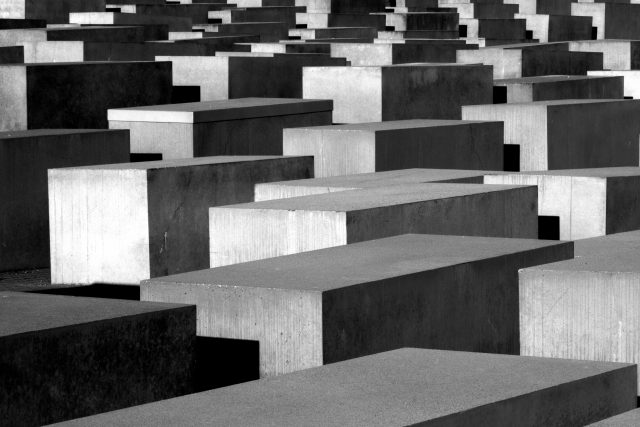
International Holocaust Commemoration Day

International Holocaust Commemoration Day is an international memorial day on January 27 commemorating the tragedy of the Holocaust that occurred during the Second World War. It commemorates the genocide that resulted in the deaths of some 6 million Jews and 11 million others, by the Nazi regime and its collaborators.

It was designated by the United Nations General Assembly resolution 60/7 on November 01, 2005 during the 42nd plenary session. The resolution came after a special session was held earlier that year on January 24, 2005 during which the United Nations General Assembly marked the 60th anniversary of the liberation of the Nazi concentration camps and the end of the Holocaust.

On January 27, 1945, Auschwitz-Birkenau, the largest Nazi concentration and death camp, was liberated by the Red Army.

Prior to the 60/7 resolution, there had been national days of commemoration, such as Germany’s Tag des Gedenkens an die Opfer des Nationalsozialismus (The Day of Remembrance for the victims of National Socialism), established in a proclamation issued by Federal President Roman Herzog on January 03, 1996; and the Holocaust memorial day observed every January 27th since 2001 in the UK.

The Holocaust Remembrance Day is also a national event in the United Kingdom and in Italy.

The General Assembly Resolution 60/7

Resolution 60/7 establishing January 27th as International Holocaust Remembrance Day urges every member nation of the U.N. to honor the memory of Holocaust victims, and encourages the development of educational programs about Holocaust history to help prevent future acts of genocide. It rejects any denial of the Holocaust as an event and condemns all manifestations of religious intolerance, incitement, harassment or violence against persons or communities based on ethnic origin or religious belief. It also calls for actively preserving the Holocaust sites that served as Nazi death camps, concentration camps, forced labor camps and prisons, as well as for establishing a U.N. programme of outreach and mobilization of society for Holocaust remembrance and education.

Resolution 60/7 and the International Holocaust Day was an initiative of the State of Israel. Minister of Foreign Affairs of the State of Israel Silvan Shalom, was the head of the delegation of Israel to the United Nations.

The essence of the text lies in its twofold approach: one that deals with the memory and remembrance of those who were massacred during the Holocaust, and the other with educating future generations of its horrors.

I Have A Dream

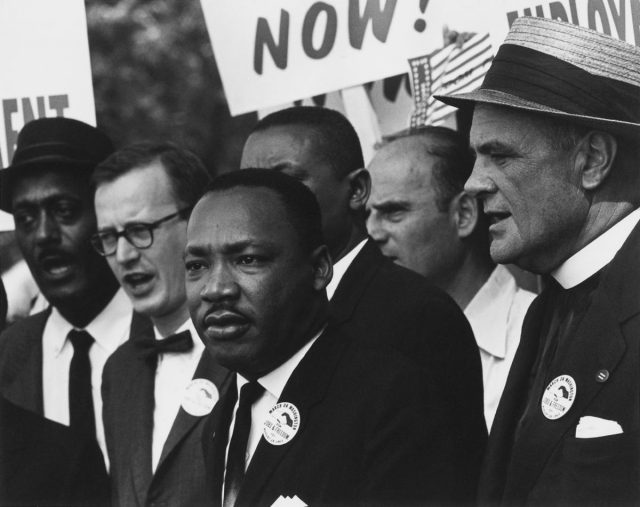
As we celebrate the life and achievements of Rev. Dr. Martin Luther King, Jr. today, let us remember the speech, which delivered on August 28, 1963, at the Lincoln Memorial, Washington, DC, still echoes with its power today.

.

.

DOI Seeks To Increase Broadband Access & Reduce Wildfire Hazards Across Rural Communities

Today, the U.S. Department of the Interior (DOI) announced three new actions by the Bureau of Land Management (BLM), U.S. Fish and Wildlife Service an the National Park Service to aggressively increase broadband internet access in rural communities and reduce wildfire risks. Deputy Secretary Katharine MacGregor made the announcement at the Bureau of Land Management headquarters in Grand Junction, Colorado.

“High-speed internet connectivity is essential for education, economic opportunity, health and public safety – especially as we continue to respond to the challenges of CoViD-19,” said Deputy Secretary MacGregor. “Facilitating greater broadband access and reducing wildfire risks for the benefit of rural and underserved communities is truly a bipartisan issue, and I hope these commonsense rules are carried forward by the incoming administration.”

The BLM has issued a proposed rule that would make it easier for industry to co-locate infrastructure, manage trees to enhance electric reliability, promote public safety and avoid fire hazards. The proposal also seeks to update the BLM’s cost recovery fee schedule for rights-of-way activities and includes definitions of hazard trees and emergency conditions, limits on liability, and agency requirements for reviewing and approving maintenance plans submitted by right-of-way holders. The proposed regulatory amendments complement ongoing efforts to reduce the vulnerability of public lands to wildfires and make it easier for firefighters to access and contain wildfires when they do break out.

The U.S. Fish and Wildlife Service’s proposed rule will streamline its regulations (50 CFR 29. 21) for permitting of rights-of-way. It will implement the use of a common application form, reduce the amount of documentation required for many types of requests and provide the Service with more flexibility to determine a right-of-way’s fair market value or fair market rental value, thereby reducing an applicant’s time and cost to obtain a right-of-way permit. The bulk of the Service’s right-of-way regulations are more than 40 years old, and these proposed changes would streamline the process.

The National Park Service has amended section 8.6.4.3, “Telecommunication Sites,” of Management Policies (2006), and section 10.2.2 of Director’s Order #53: Special Park Uses, which require superintendents to only accept applications for telecommunications sites from Federal Communications Commission licensees or agencies regulated by the Department of Commerce through the National Telecommunications and Information Administration. The change amends this requirement, allowing the NPS to accept applications for communications sites from additional applicants, such as companies who own and operate telecommunications towers. These updates will allow the NPS to work more efficiently in processing rights-of-way permits for telecommunications infrastructure in national parks while continuing to ensure park resources are protected.

The BLM and FWS proposed rules were both delivered to the Federal Register today. Publication in the Federal Register will open a 60-day comment period for each rule, and the respective notice will include information on how to comment.

Background

The proposed changes by Interior align with Executive Order 13821, Streamlining and Expediting Requests To Locate Broadband Facilities in Rural America, which includes direction for relevant federal agencies to increase access to tower facilities and related infrastructure, and to identify assets that can be used to support rural broadband deployment and adoption. The proposed changes also conform to Executive Order 13855, Promoting Active Management of America’s Forests, Rangelands, and Other Federal Lands To Improve Conditions and Reduce Wildfire Risk and Executive Order 13868, Promoting Energy Infrastructure and Economic Growth.